






SEC’s Selway Pushes Toward Unified Crypto Market…
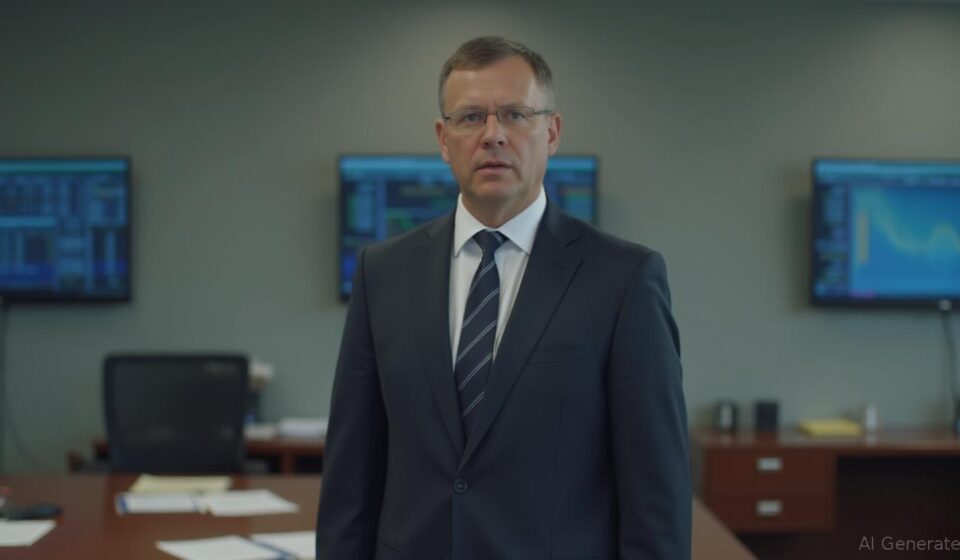
The US Securities and Exchange Commission is moving closer toward a coordinated regulatory framework with the Commodity Futures Trading Commission for tokenized securities, perpetual futures, and digital asset trading infrastructure, according to remarks delivered Thursday by Jamie Selway, Director of the SEC’s Division of Trading and Markets.
Speaking at the Piper Sandler Global Exchange & Fintech Conference in New York, Selway outlined what may become one of the most important structural shifts in US market regulation in years: the gradual alignment of SEC and CFTC approaches around digital assets, derivatives, tokenization, and extended-hours trading.
The speech arrives as regulators face growing pressure to define jurisdictional boundaries across crypto products that increasingly blur the lines between securities, swaps, prediction markets, and futures.
SEC And CFTC Move Closer On Crypto Market Structure
Selway said the SEC is working with the CFTC on a framework for tokenized securities under the leadership of SEC Chairman Paul Atkins, with “innovation without arbitrage” serving as the guiding principle.
The speech also confirmed that regulators are evaluating ways to harmonize SEC and CFTC policies in areas where the rulebooks overlap or conflict.
“Firms should not be shuffled back and forth between regulators when a product touches elements of both regulatory frameworks,” Selway said, citing remarks previously delivered by Atkins at the FIA Global Cleared Markets Conference in March.
The comments suggest Washington may be entering a new phase of crypto oversight after years of regulatory fragmentation, lawsuits, and jurisdictional disputes between federal agencies.
The SEC director identified several areas already under review, including swap and security-based swap reporting, portfolio margining, and product definitions. He also confirmed that the agencies are jointly evaluating novel financial products.
That includes CME Group’s application to trade single-stock futures with cash-settled PM settlement and Nasdaq PHLX’s recently approved cash-settled Bitcoin index options.
The broader implication is significant for exchanges, brokers, clearing firms, and crypto platforms. For years, uncertainty around whether a product fell under securities law, commodities law, or swap regulation created one of the largest barriers to launching new digital asset products in the United States.
The SEC’s remarks suggest regulators increasingly recognize that market structure rules designed decades ago may no longer fit products built around tokenization, perpetual trading, and around-the-clock digital markets.
The agencies are also preparing for a broader operational transformation in traditional markets. Selway confirmed the SEC is working to facilitate a transition toward 23-by-5 equity trading by the end of this year while also reviewing legacy rules such as Regulation NMS and the Consolidated Audit Trail.
That push reflects growing pressure from exchanges and retail trading platforms seeking longer trading windows to compete with crypto markets that already operate continuously.
24-hour market infrastructure has become one of the defining themes across exchanges globally. CME Group recently launched 24/7 crypto futures trading, while brokerages including Robinhood and Interactive Brokers expanded overnight trading access in US equities.
Perpetual Futures Become The Industry’s Biggest Regulatory Question
The speech also placed renewed attention on one of the crypto industry’s most controversial products: perpetual futures.
Perpetual contracts, commonly known as “perps,” dominate offshore crypto derivatives markets because they allow traders to maintain leveraged exposure without expiration dates. According to CCData, perpetual futures represented more than 70 percent of centralized crypto derivatives trading volume globally during several months of 2025.
Until recently, however, perpetual futures largely existed outside the regulated US market structure.
Selway acknowledged that regulators remain divided on how these products should be classified.
“Perps are popular outside our regulatory perimeter, particularly for digital assets,” Selway said.
The SEC official referenced a joint SEC-CFTC roundtable held last September where industry participants debated whether perpetuals should be treated as futures contracts or swaps.
Don Wilson of DRW argued that perpetuals fit within futures regulation, while Cboe Global Markets CEO Craig Donahue suggested swaps treatment may be more appropriate under current law.
The debate intensified further after the CFTC approved Kalshi’s proposal to list perpetual Bitcoin futures contracts in May.
That decision immediately attracted attention across crypto and exchange markets because it opened a potential regulated pathway for perpetual products in the United States.
The CFTC simultaneously stated that additional perpetual contracts tied to other underlying assets would face case-by-case review.
The commercial stakes are substantial.
Perpetual futures are among the most profitable products in global crypto trading because of their high activity levels, funding mechanics, and leverage-driven liquidity. Offshore exchanges including Binance, Bybit, and OKX built significant portions of their derivatives businesses around perpetual contracts unavailable in regulated US markets.
If regulators establish a compliant framework for perpetuals in the United States, major exchange groups, brokers, and clearing firms may move aggressively into the product category.
That could reshape competition between regulated US venues and offshore crypto exchanges that historically dominated derivatives activity.
Washington Opens The Door To Tokenized Market Infrastructure
The speech also provided one of the clearest signals yet that US regulators are actively preparing for tokenized securities infrastructure.
Selway said the SEC is working on a framework allowing tokenized securities to list and trade inside regulated markets.
The topic has become increasingly important across both traditional finance and crypto as firms including BlackRock, Franklin Templeton, Robinhood, Coinbase, Kraken, and several major exchanges explore tokenized stocks, funds, and real-world assets.
Boston Consulting Group and Ripple estimated in a joint report that the tokenized asset market could reach $18.9 trillion by 2033, while McKinsey estimated tokenization could become a multi-trillion-dollar market across funds, bonds, collateral, and alternative assets.
The SEC’s remarks suggest regulators are increasingly shifting from enforcement-driven discussions toward operational and structural questions: how tokenized securities trade, clear, settle, margin, and interact with existing market rules.
That may prove more important for the industry over the long term than the headline enforcement battles that dominated recent years.
Selway nevertheless warned that regulators would continue focusing on leverage and speculative behavior.
“We must distinguish investing from gambling,” he said.
The SEC official also warned against “extending unhealthy levels of leverage to the unsophisticated and unsuspecting.”
Those comments indicate that even as Washington appears more open to tokenization and product innovation, regulators remain cautious around retail leverage and speculative market structures.
The speech therefore reflects a balancing act emerging inside US financial regulation: regulators increasingly want innovation to move into regulated markets rather than remain offshore, but they also want stronger oversight around leverage, disclosure, and investor protection.
The outcome could determine whether the United States becomes a major regulated hub for tokenized assets and crypto derivatives over the coming years or whether activity continues migrating toward offshore venues with lighter supervision.
For exchanges, brokers, and fintech firms, the message from Washington is increasingly clear: tokenized securities, perpetual futures, and extended-hours trading are no longer theoretical debates. Regulators are now openly preparing the infrastructure rules that may govern the next generation of financial markets.
Takeaway
Jamie Selway’s remarks suggest US regulators are moving beyond the enforcement-heavy phase of crypto oversight and toward building operational frameworks for tokenized securities, perpetual futures, and extended-hours trading inside regulated markets. The biggest unresolved issue may now be whether Washington can harmonize SEC and CFTC oversight fast enough to compete with offshore crypto infrastructure already operating at global scale.